GOT QUESTIONS? WE HAVE BEEN ASKED MOST OF THEM.
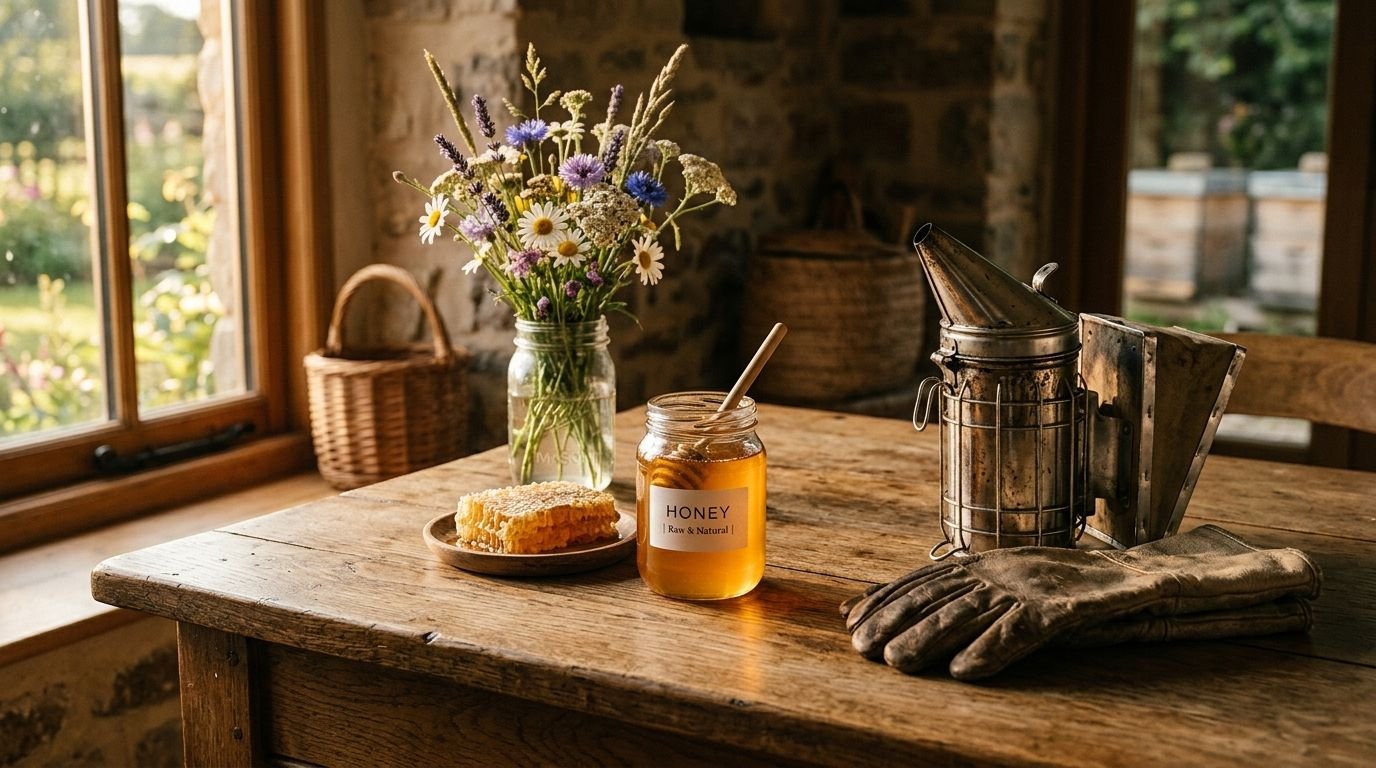
After more than a decade of beekeeping, selling honey, and talking to thousands of people at farmers markets — we have heard just about every question there is. Here are the answers to the ones that come up most.
ABOUT OUR HONEY
The questions people ask most when they pick up a jar.
Store-bought honey is typically pasteurized (heated to high temperatures) and ultra-filtered, which strips out the pollen, enzymes, and natural compounds that make honey special. Our honey is raw — meaning it goes straight from the extractor to the jar. No heating, no blending, no additives. The flavor, the pollen, and the good stuff are all still there.
Many of our customers swear by it. The idea is that local honey contains small amounts of local pollen, which may help desensitize the body over time. We are not doctors and cannot make medical claims, but we can tell you that allergy season is our busiest time at the market. Take from that what you will.
Crystallization is completely natural — it actually means your honey is real and unprocessed. All raw honey will crystallize over time. To return it to liquid form, place the jar in a bowl of warm water (not boiling) and let it sit for a while. The crystals will dissolve. Do not microwave it — high heat destroys the beneficial enzymes.
Store it at room temperature in a sealed container. There is no need to refrigerate honey — in fact, refrigeration speeds up crystallization. Kept at room temperature and sealed, raw honey will last indefinitely. They have found pots of edible honey in ancient Egyptian tombs.
The color and flavor of honey depends on what the bees are foraging. Spring honey tends to be lighter and more floral, while late-summer honey is darker and more robust. Every batch is different because every bloom season is different. That is one of the beautiful things about raw local honey.
Absolutely. Raw honeycomb is edible and delicious. The wax is natural beeswax and is perfectly safe to eat. Spread it on toast, pair it with cheese, or just chew it like nature's candy. It is honey in its purest possible form.
ABOUT BEEKEEPING & BUYING BEES
For new beekeepers and those thinking about getting started.
A nucleus hive (NUC) is a small starter colony — five frames with a queen, brood, honey, and bees. You transfer the frames into your own full-size hive and the colony grows from there. A full-size hive is an established colony already in its complete hive setup, ready to produce. NUCs are more affordable and better for learning, while full hives give you a head start.
We recommend two hives. Having two colonies lets you compare behavior, share resources between hives if one is struggling, and gives you a backup if one colony fails. It is the best balance of learning opportunity and manageable workload.
Yes, bees sting. Russell learned that the hard way when he checked on the hives without suiting up and caught a sting right between the eyes. A bee suit, veil, and gloves go a long way. Smoke calms the bees during inspections. With experience, you learn to read the bees' mood and work with them calmly. Stings happen, but they become less common over time.
ABOUT AG EXEMPTION & THE BUSINESS
For Texas landowners curious about bees and tax savings.
This depends on your county. Each county appraisal district sets its own requirements. In Collin County, the standard has been approximately 6 hives per 5 acres. Contact your county appraisal district for current requirements.
STILL HAVE A QUESTION?
We love talking about bees, honey, and everything in between. Drop us a line and we will get back to you — we read every message personally.
ASK US ANYTHING