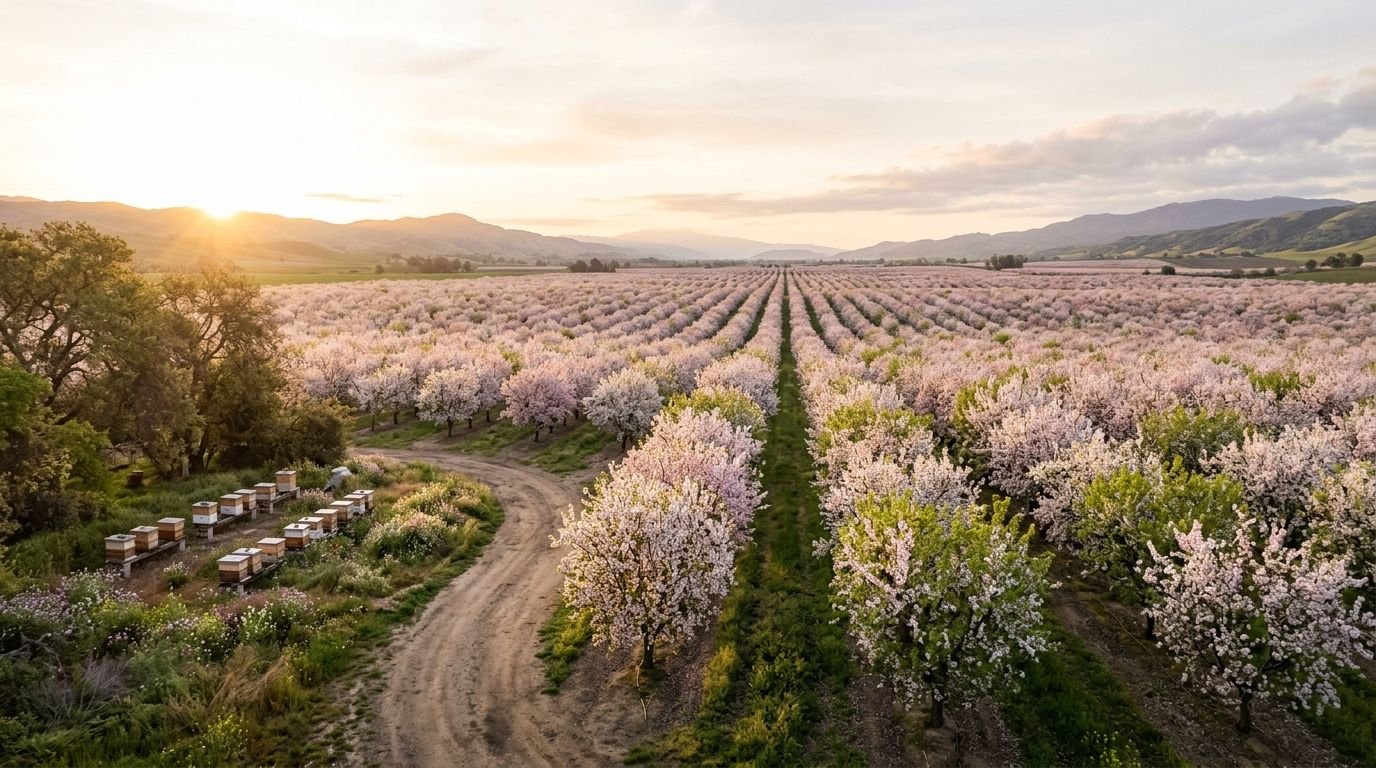
EVERY ALMOND STARTS WITH A BEE.
Each February, we send our strongest colonies to California to pollinate almond orchards. It is hard work — long nights loading hives, a cross-country trip, and weeks away from home. But commercial pollination is essential to the nation's food supply, and it is one of the most meaningful things we do.
WHAT IS ALMOND POLLINATION?
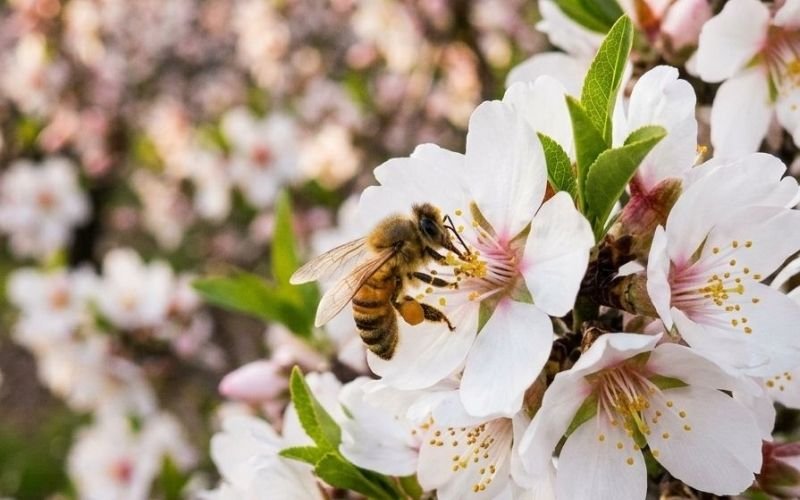
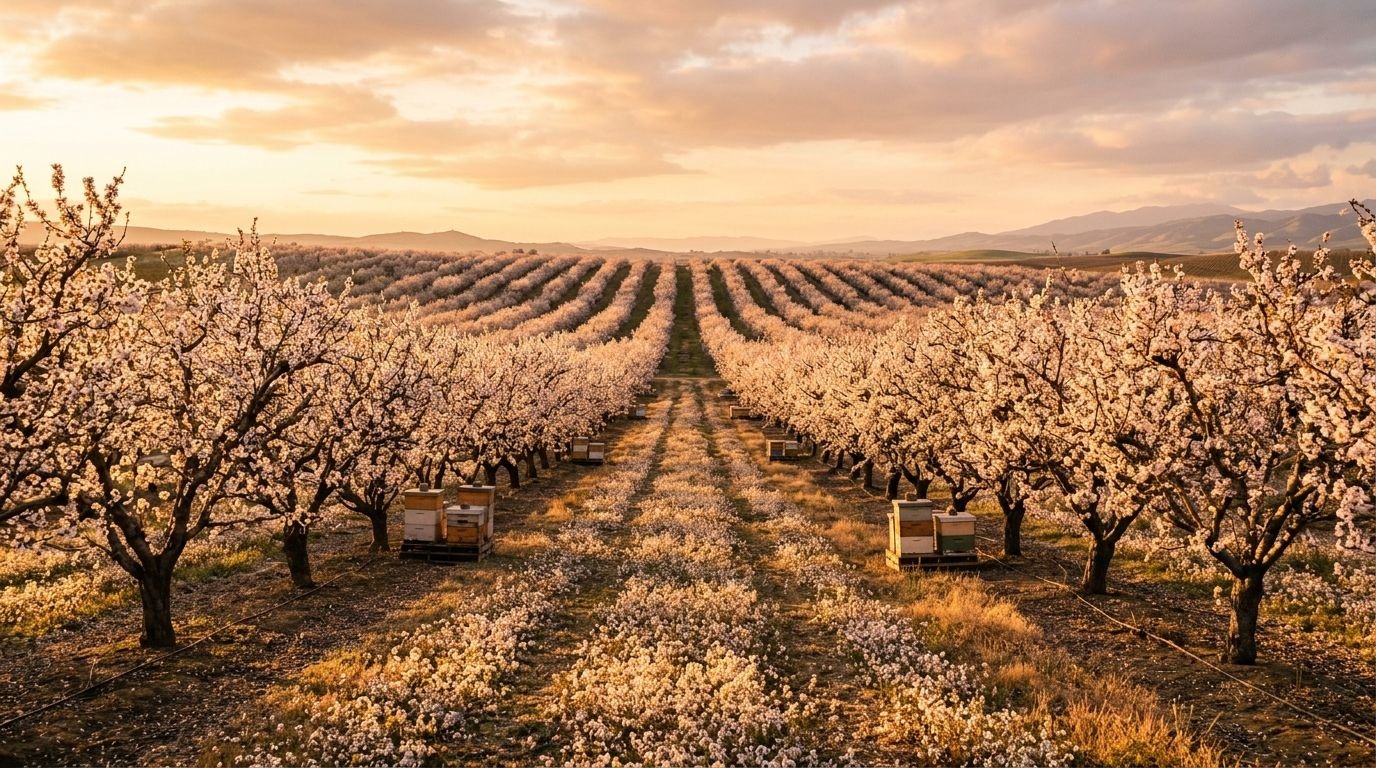
California produces over 80% of the world's almonds — and every single one of those almonds requires pollination by a honey bee. The almond trees bloom in February, and for a few short weeks the orchards need billions of bees to pollinate the blossoms and set the crop.
Beekeepers from across the country send their hives to California for this critical window. The orchards cannot produce without the bees, and the scale of the operation is staggering — roughly two million colonies are needed every year to pollinate the California almond crop.
Crooked Creek Honey Farm is proud to be part of this effort. Sending our bees to the almonds is not just a business decision — it is a way to contribute to the agricultural system that feeds the country.
PREPARING FOR THE TRIP
Getting hives ready for almond pollination starts months before the trucks roll. All through the fall and into winter, we focus on building colony strength — testing for varroa mites, treating when necessary, combining weak hives, and making sure every colony headed for California has a strong queen and a large population.
Weak hives do not make the trip. California requires a minimum number of frames covered with bees per colony, and growers inspect the hives when they arrive. We hold ourselves to a higher standard than the minimum because we want our bees to do good work and come home healthy.
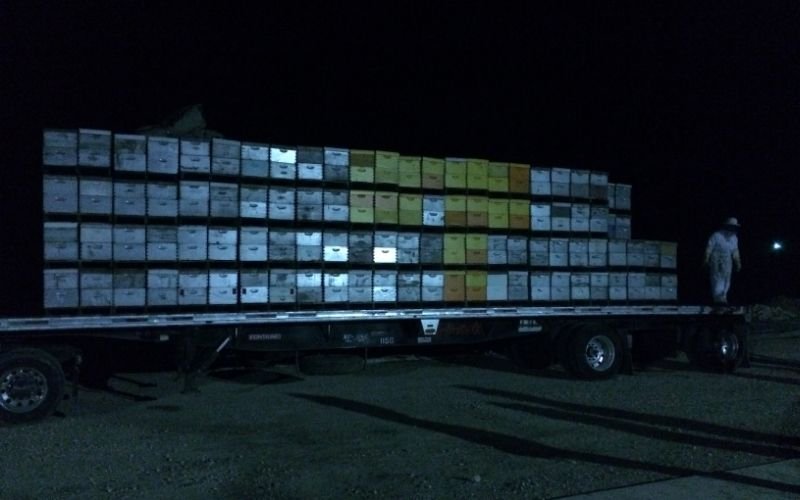
When the time comes, we load the hives at night — when all the foragers are back in the box — and they make the long trip west. It is not glamorous work, but it is essential.
POLLINATION BY THE NUMBERS
The scale of what it takes to pollinate the California almond crop.
WHAT HAPPENS WHEN THEY COME HOME
When our hives return from California in late February or early March, the real spring work begins. The colonies come back stimulated from the almond bloom — they have been working hard and the populations are building. That is when we split hives, introduce new queens, and prepare for the North Texas spring nectar flow.
The cycle starts all over again. We build the colonies up through spring and summer, harvest honey, attend markets, test and treat in the fall, and prepare the strongest hives for the next almond season. It is a year-round commitment — and we would not have it any other way.
QUESTIONS ABOUT OUR POLLINATION SERVICES?
If you are a grower looking for pollination or a beekeeper interested in learning more about our operation, we are happy to talk. Drop us a line.
CONTACT US